.png)
Uganda’s FY 2026/27 Budget Sets Stage for New Infrastructure and Construction Activity
Updated: Jun 22
Uganda’s UGX 84.39 trillion FY 2026/27 budget signals renewed construction activity across roads, tourism, energy and regional infrastructure.
Parliament’s adoption of the UGX 84.39 trillion 2026/27 national budget has set the operating landscape for Uganda’s construction and built-environment sectors in the coming financial year. The budget represents a 16% expansion, with domestic tax revenues projected to contribute UGX 44.18 trillion, covering more than half of the aggregate balance.

For contractors, subcontractors, suppliers and developers, the most relevant signals are in public infrastructure, tax compliance relief, tourism development, energy infrastructure and regional investment. The budget includes an increase in the mandatory VAT registration threshold from UGX 150 million to UGX 300 million in annual turnover, which could ease compliance pressure on growing local subcontractors, specialist artisans and building material suppliers.
The budget also introduces targeted tax exemptions for developers constructing ultra-luxury tourism facilities, alongside specific exemptions for strategic energy infrastructure developments aimed at managing industrial electricity tariffs. These measures point to continued government interest in tourism-linked construction, energy facilities and value-addition infrastructure.
Strategic sector investments are also expected through the Uganda Development Bank and the Parish Development Model, which is expanding to UGX 4.4 trillion across 10,589 parishes. These allocations are intended to support regional industrial parks, value-addition facilities and rural infrastructure, creating potential downstream demand for construction services, materials, equipment and site labour across the country.
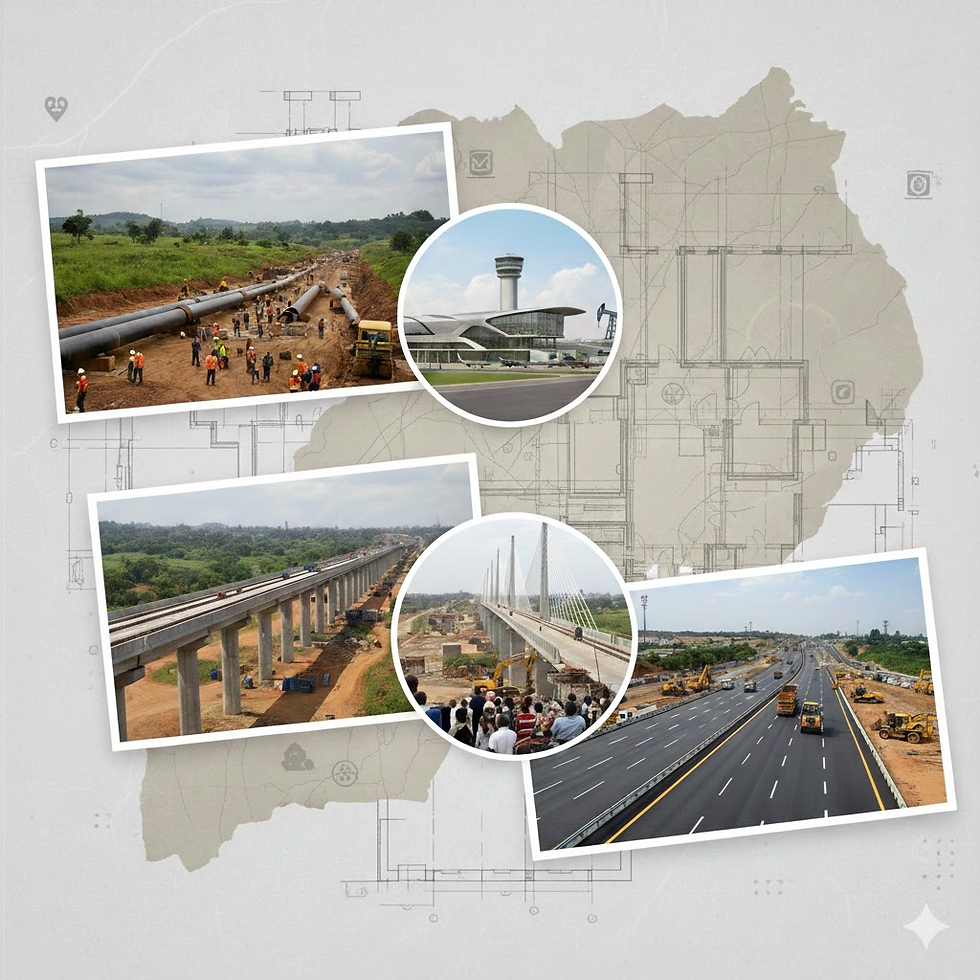
One project already moving into procurement is the Kampala Northern Bypass Extension, currently open for bidding under tender reference UNRA/RDS/2026-001. The project covers a 20-kilometre road alignment expansion, dedicated multi-level flyovers, major intersection interchanges and large-scale stormwater drainage works. With an estimated value of UGX 400 billion and a bid closure date of July 27, 2026, it remains a significant commercial opportunity for Tier-1 civil contractors operating in the Central region.
Road infrastructure activity is also emerging in the tourism sector. Heavy equipment mobilization is underway for transport network rehabilitation inside key conservation areas, including Bwindi Impenetrable, Kibale and Queen Elizabeth National Parks. The works fall under the World Bank IFPA-CD project framework and are expected to support gravel road upgrades, culvert systems and improved access links ahead of peak tourism seasons.
Recent supply contracts for heavy plant machinery, including graders, excavators and tractors, have been fulfilled through Mantrac Uganda and Muhick International, with additional heavy bulldozers expected before July 2026. This points to active preparation for civil works in sensitive ecological zones, where access, drainage and logistics will be central to delivery.
For the construction sector, the combined picture is one of expanding public expenditure, targeted tax relief and renewed project activity in roads, tourism, energy and regional infrastructure. However, contractors will still need to watch procurement timelines, fiscal disbursement discipline and implementation capacity, especially on projects that depend on public financing and multi-agency coordination.