.png)
Does Lira Need an International Airport, or a Better Transport Network?
Does Lira need an international airport? CFUg examines Uganda’s aviation ambitions, rail alternatives, transport demand and the need for integrated infrastructure planning.
Uganda’s plans to develop a major international airport at Anai in Lira have once again put aviation at the centre of the country’s infrastructure ambitions. The immediate controversy is over land: residents have challenged the expansion of the proposed airport boundary into privately titled property, with the dispute now before court-assisted mediation. But beyond compensation and land acquisition lies a more fundamental infrastructure question: what transport problem is an international airport in Lira intended to solve?
The question matters because Lira does not sit in geographic isolation. It lies along the Tororo–Gulu railway corridor, a 375-kilometre line passing through Mbale, Kumi, Soroti and Lira before terminating at the Gulu Logistics Hub. Government is already rehabilitating this corridor precisely to lower transport costs, move bulk freight away from roads and stimulate agriculture, industry and trade across Northern and Eastern Uganda.
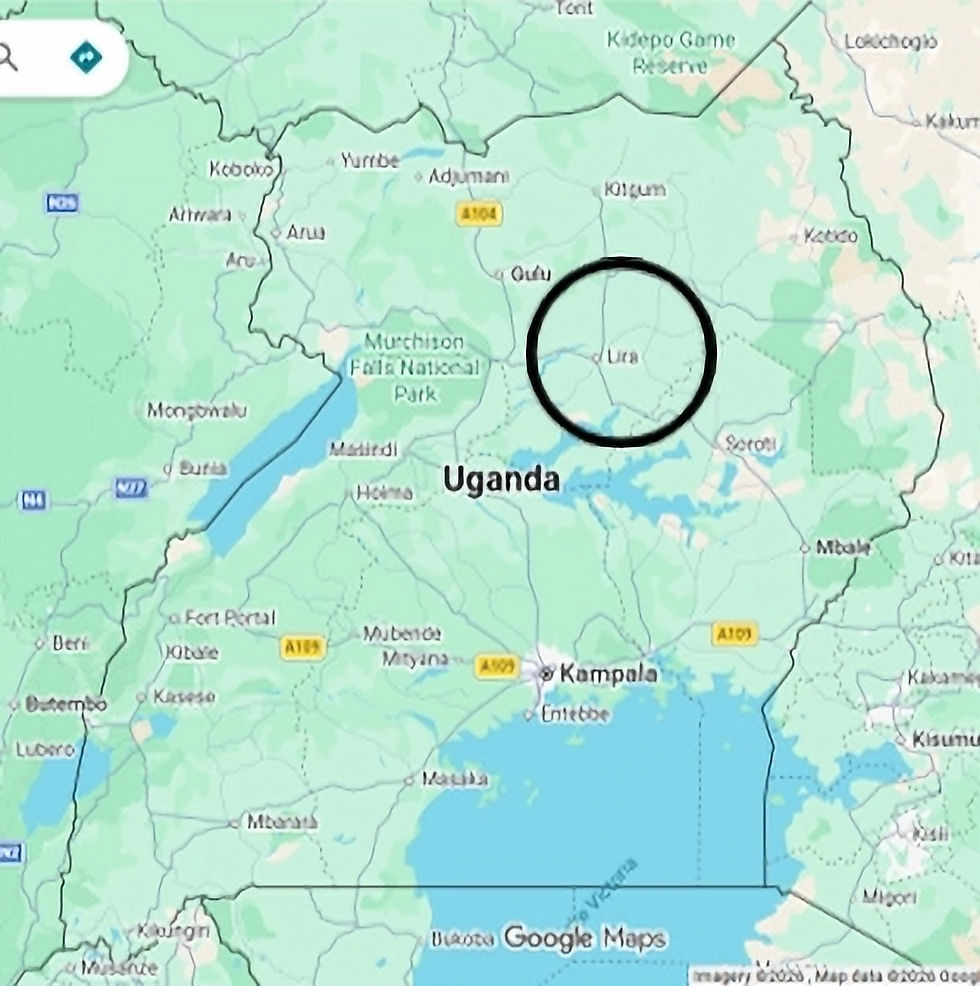
That makes Lira an unusual place in which to discuss a new international airport without first explaining how aviation fits into the transport network already being developed around it.
The Issue Is Not Whether Lira Deserves Infrastructure
Lira unquestionably does.
It is a major urban and commercial centre serving a large agricultural hinterland. Northern Uganda needs stronger connections to national and regional markets, and Lango has every reason to expect continued investment in transport infrastructure.
The issue is therefore not whether Lira should be better connected.
It is which mode of transport delivers the greatest economic and social benefit for the investment required.
International airports are expensive infrastructure systems. The runway is only one component. International operations require terminals, navigation systems, safety and rescue services, security, customs and immigration capability, ground handling, maintenance, staffing and reliable surface connections.
Those costs make sense where there is sufficient passenger or cargo demand.
So far, however, the public discussion around the Lira proposal provides far less clarity about that demand than about the airport itself.
What annual passenger numbers are forecast?
What international destinations would Lira serve?
What air cargo?
Which businesses or industries require direct international aviation access?
How much traffic would be additional demand rather than traffic redistributed from other airports?
And, importantly, why would domestic aviation through an upgraded regional airport not satisfy much of the same need?
These questions should ordinarily precede the scale of infrastructure being proposed.
Northern Uganda Is Already Developing Several Aviation Gateways
The question becomes even more pressing when Lira is viewed as part of the wider aviation map.
Arua is being upgraded substantially and already has a long history of functioning air services. Earlier government transport planning data showed that Arua alone accounted for about half of passenger traffic through Uganda’s upcountry aerodromes in 2015, which is evidence of an established aviation market rather than purely anticipated demand.
Gulu has long been identified for upgrading.
The recently commissioned Kidepo International Airport is now under development to support tourism and investment in Karamoja.
Each project may have an individual justification.
The harder question is whether they form a coherent network.
Arua has a distinctive geographical proposition close to South Sudan and the Democratic Republic of Congo.
Kidepo has a specific tourism proposition.
Gulu is Northern Uganda’s largest established urban and logistics centre and is being developed alongside the Gulu Logistics Hub.
Lira lies roughly 100 kilometres from Gulu and is already connected to the same rail corridor.
If each centre is nevertheless to require international-airport capacity, then the national aviation strategy should be capable of showing clearly how their catchments, markets and functions differ.
Otherwise, there is a risk that infrastructure development becomes a collection of individually desirable projects rather than an integrated transport system.
Rail Changes the Equation
Rail is particularly important to this discussion because it solves a fundamentally different problem from aviation.
An airport connects two distant points quickly.
A railway connects an entire corridor.
The rehabilitated Tororo–Gulu line does not simply join Tororo and Gulu. It passes through several economic centres, including Lira, and links surrounding agricultural and industrial areas into a broader logistics system.
The same infrastructure can also support passenger mobility.
That distinction matters in a country where affordable regional transport remains a significant constraint.
A reliable passenger railway could serve workers, students, traders, families and tourists alongside freight. It could reduce dependence on long-distance road transport, lower pressure on highways and create connections between towns rather than merely between airports.
For Uganda’s tourism ambitions, rail may be particularly underappreciated.
Many of the country’s major tourism destinations require long road journeys from Kampala or Entebbe. Comfortable intercity rail toward western and northern Uganda would not eliminate the need for roads, but it could transform the longest portion of those journeys. Road transport would then serve the final connection to parks and attractions.
That model would serve tourists while simultaneously benefiting the resident population and productive economy.
An international airport, by comparison, serves a much narrower transport market.
Poor Connectivity Can Make Places Look Farther Apart Than They Are
Uganda’s road condition creates another planning trap.
When travelling 100 or 200 kilometres is slow, unpredictable or uncomfortable, neighbouring regional centres begin to feel geographically distant. Building another airport can then appear to solve the problem.
But sometimes the underlying problem is not distance.
It is poor connectivity.
A dependable road and rail network can effectively bring cities closer together without duplicating expensive infrastructure in each one.
Investment in surface transport also distributes benefits more widely. Roads and railway stations serve settlements, businesses, farms and communities throughout a corridor.
Airports principally serve their origin and destination points.
For development planning, that difference matters.
Uganda’s Own Strategy Calls for Integration
The apparent contradiction is that Uganda’s national transport planning already recognises this.
Government’s railway strategy calls for rehabilitation of the metre-gauge network, increased passenger and freight movement, reduced transport costs and greater integration between transport modes. The Gulu Logistics Hub is explicitly intended to shift cargo from roads to rail and strengthen Northern Uganda’s role in trade with South Sudan and eastern DRC.
The policy language therefore points toward integration.
The challenge is ensuring that individual investments follow that logic.
International Status Should Follow Demand
There may ultimately be a compelling economic case for an international airport at Lira.
If feasibility studies demonstrate sufficient passenger demand, cargo volumes, regional traffic or strategic economic activity, the investment may be justified.
But those numbers should lead the conversation.
The label “international airport” should describe the function demanded by an economy rather than become a development objective in its own right.
Lira certainly needs infrastructure. Northern Uganda certainly needs stronger connectivity. But before land is acquired and large amounts of capital committed, the question deserves a clear answer:
Does Lira need another international gateway, or would stronger rail, roads and regional aviation connect its economy more effectively?
More fundamentally, Uganda’s infrastructure challenge is one of systems thinking and systems planning. Too often, roads, railways, airports, logistics hubs, urban development and public services are planned and implemented as separate projects rather than as parts of one interconnected economic and spatial system. Yet modern infrastructure planning increasingly depends on understanding those relationships: how one investment changes demand elsewhere, where duplication occurs, which modes complement each other, and which intervention removes the greatest constraint at the lowest long-term cost.
Uganda does not suffer from a shortage of infrastructure ambitions. The greater challenge is ensuring that individual projects are conceived as components of an integrated system rather than isolated achievements. In an era of abundant data, modelling tools and accumulated planning knowledge, infrastructure governance should be moving away from siloed project development and toward coordinated, evidence-led systems planning.
The real test is not how many airports, roads or railways are built, but whether they work together to improve mobility, productivity and access across the country.


