.png)
Spiro: is electric-mobility becoming an infrastructure market?
Spiro’s new $18 million financing puts Uganda’s electric-mobility infrastructure in the spotlight
Electric-mobility company Spiro has secured an additional US$18 million in debt financing from the Africa Go Green Fund, taking the fund’s total commitment to the company to US$36 million. The new financing will support further deployment of electric motorcycles and expansion of battery-swapping infrastructure in Uganda and Rwanda. As of September 2026, Spiro says it has deployed more than 135,000 electric motorcycles across its African markets and completed more than 50 million battery swaps.
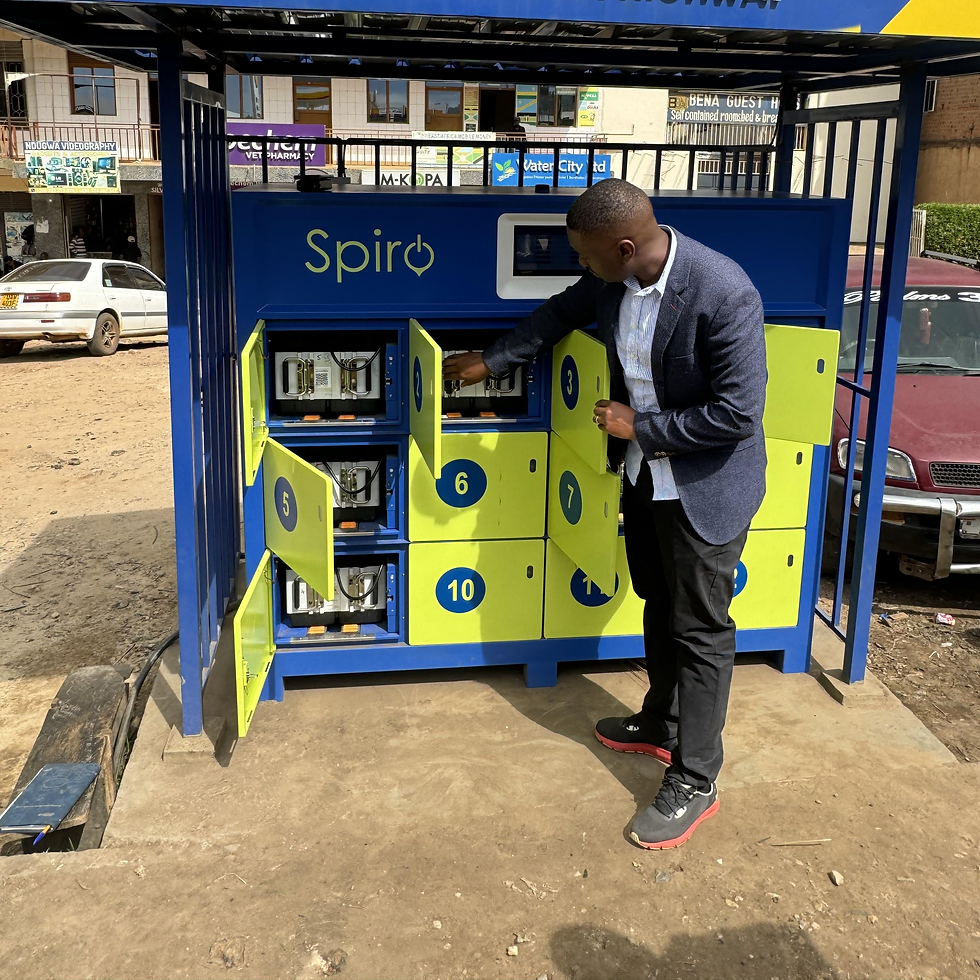
For Uganda, the more interesting story is what sits behind the motorcycles. Battery swapping turns electric mobility into a distributed infrastructure network requiring land, electricity, grid connections, stations, maintenance and reliable battery logistics. The World Bank says Uganda’s battery-swapping network had already expanded from about 150 stations in mid-2024 to more than 350 by late 2025, while its modelling suggests the country could have between 800,000 and 4 million electric vehicles by 2040, depending on the scenario. The Bank also identifies affordable finance, grid planning, regulation and access to suitable sites as key conditions for scaling the market.
Why it matters: Uganda’s electric-mobility transition could therefore create a construction and infrastructure market alongside the vehicle market, from battery-swap hubs and depots to electrical works, charging infrastructure and specialised urban sites. The current constraint in places such as West Nile already illustrates the point: demand for Spiro motorcycles has grown, but inadequate swapping points are limiting expansion.
Key takeaway: The important question is no longer simply whether Ugandans will buy electric motorcycles. It is whether Uganda can build the physical and energy infrastructure that makes electric mobility convenient enough to scale.