.png)
Lamu Refinery: Industrial Ambition Meets Environmental and Heritage Concerns
The proposed Lamu refinery raises concerns over environmental protection, ancestral land rights and UNESCO heritage, highlighting critical lessons for infrastructure project planning.
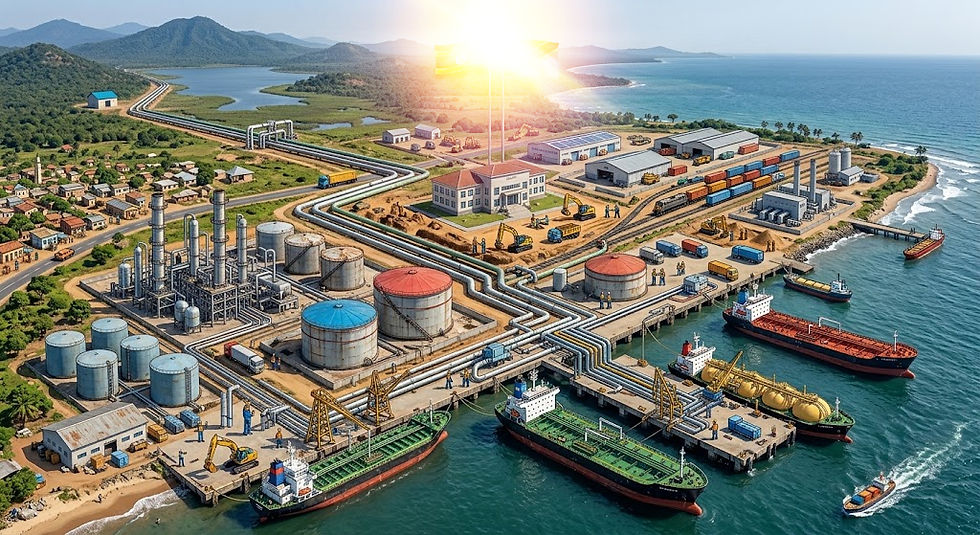
The News: The planned US$16 billion Dangote East Africa Petroleum Refinery in Lamu, on Kenya's northern coast, has moved from announcement to groundbreaking, but questions over land rights, environmental protection and public participation still linger. Nigerian industrialist Aliko Dangote and Kenyan President William Ruto launched the project on 30 September 2026. The proposed refinery is designed to process 700,000 barrels of crude oil daily, with completion targeted for 2030 and up to 60,000 jobs anticipated at the peak of construction. Yet the development sits across the bay from Lamu Old Town, a centuries-old Swahili trading settlement recognised as a UNESCO World Heritage Site. Tourism operators and environmental campaigners fear the industrial development could threaten the coastal environment and the heritage that sustains the town's distinctive character.

The dispute has moved beyond public criticism into the courts. More than 130 Lamu residents have challenged the use of land they claim as ancestral property, raising concerns over compensation and land rights. The court has directed that the status quo be maintained on the disputed parcel pending a hearing scheduled for 14 October 2026; this is not a blanket suspension of the entire refinery project. Separately, the Consumers Federation of Kenya has challenged aspects of the project's transparency and approval process. Environmental campaigners have also called for the environmental and social impact assessment findings and proposed mitigation measures to be made public.
Implications: For construction and infrastructure stakeholders, Lamu illustrates the tension between the economic case for a major industrial project and the environmental, social and cultural conditions surrounding its location. The refinery promises employment, energy security and new industrial capacity, but its coastal setting raises concerns about mangroves, coral reefs, seagrass, marine life, fisheries and tourism-dependent livelihoods. These are not peripheral considerations: environmental damage or unresolved land disputes can create legal exposure, delay construction, increase costs and undermine a project's long-term economic benefits. Lamu's experience is particularly relevant to Uganda because President Yoweri Museveni attended the groundbreaking and backed regional refinery development as a complement to Uganda's own plans. The lesson for project owners, engineers, environmental consultants and financiers is that technical feasibility and investment potential must be considered alongside environmental assessment, land rights, public participation and heritage protection.
Key Takeaway: A project's economic promise does not remove the obligation to demonstrate that its costs and risks have been properly assessed. As the Lamu refinery advances, the critical indicators to watch are the disclosure and adequacy of its environmental and social impact assessment, the resolution of land compensation disputes, meaningful community participation and compliance with applicable court orders. The 14 October hearing is an immediate milestone, but it might not by itself settle every environmental or project-delivery question. For Uganda's infrastructure sector, the broader lesson is to treat environmental safeguards, stakeholder engagement and land acquisition as core project requirements from the earliest planning stages, not as obstacles to be addressed after political commitments and construction ceremonies have taken place.