.png)
What if Ugandans actually sorted their waste as decreed by the PM?
What if Ugandans actually sorted their waste as decreed? We examine whether Uganda’s waste infrastructure is ready to make source separation work.
Ugandans have demonstrated that they can respond remarkably quickly to nationally directed community initiatives. The monthly cleaning and sanitation exercise is a useful contemporary example: the policy instruction was issued, communities began participating, and the behaviour became visible at neighbourhood level. So far, so good. The more interesting question may therefore not be whether households will comply, but whether the waste-management system behind them is ready when they do.
Prime Minister Robinah Nabbanja has called for waste sorting at source as part of efforts to improve sanitation and waste management. The government's push to have households and institutions sort waste at source sounds straightforward enough: segregate waste where it is generated so that recyclable, organic and residual waste can be handled appropriately.
The principle is difficult to argue with. The harder question is what happens after the household has done its part.
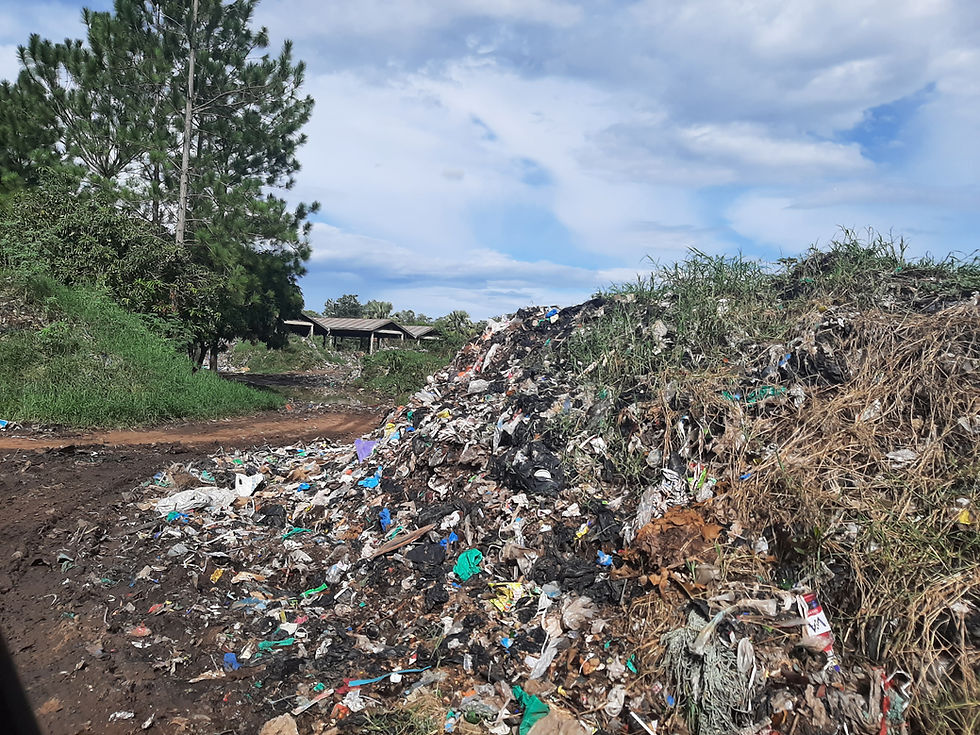
For households that have been separating waste voluntarily, this is not an entirely theoretical concern. Imagine sorting organic waste, recyclables and residual waste carefully, only for everything to be collected together and ultimately tipped into the same dumpster or dump truck. What incentive remains for the household to continue? The behaviour being encouraged by policy is effectively being undone by the system that follows it.
This raises a fundamental question: does Uganda currently have the infrastructure required to make separation at source meaningful?

If households are expected to separate waste, collection systems must be capable of preserving that separation. That potentially means different collection streams, appropriate vehicles or collection arrangements, transfer facilities, sorting and recovery infrastructure, composting capacity, recycling markets and an appropriate destination for residual waste. Without those links, source separation risks becoming an additional responsibility placed on households without a corresponding transformation of the waste-management system.
There is also a question of trust. Environmental policy depends partly on people believing that their individual effort contributes to a collective outcome. If citizens repeatedly see separated waste being mixed during collection or disposal, confidence in the policy can suffer. The danger is not simply that some households will stop sorting. It is that people who have been willing to participate may conclude that the system itself does not respect the behaviour it asks of them.
Then there is another group whose interests deserve consideration: the people already making a living from waste.
Waste collectors and informal waste pickers, particularly those operating around higher-income neighbourhoods, recover recyclable materials from discarded waste and sell them into existing recycling chains. Source separation could make recyclable materials cleaner and potentially more valuable. But it could also change who has access to those materials. If households separate recyclables and formal collection companies take control of those streams, what happens to the people whose livelihoods currently depend on recovering them?
Would they be displaced, or could they become part of a more organised recovery system?
These are not arguments against sorting waste at source. They are questions about what a successful system would need to account for.
Perhaps, therefore, Uganda does not have to choose between doing nothing and immediately imposing a nationwide system. A pilot could provide a useful middle ground.
Government could begin with one carefully selected neighbourhood and test the complete chain, from the household bin through collection, transportation and recovery to the final destination. The objective would not simply be to count how many households sort correctly. The pilot could examine participation rates, contamination, collection costs, quantities recovered, recycling or composting outcomes, the handling of residual waste and the experience of waste collectors and informal waste pickers.
The lessons could then inform a second, broader pilot involving different types of neighbourhoods. What works in an affluent urban community may not work in a lower-income settlement, and a system that looks successful during an initial campaign may behave differently once the novelty disappears.
Only then might government have the evidence required to consider wider implementation with greater confidence.
There is another important principle here: a genuine pilot should be allowed to reveal what does not work. Its purpose should be learning, not simply demonstrating that a policy already decided upon is successful.
Uganda has no shortage of environmental and infrastructure policies that look sensible on paper. The challenge is often the systems required to make them work in practice. Waste sorting at source is no different.
It is one thing for the Prime Minister to decree that waste should be sorted at source. It is another to build a system that makes sorting worthwhile for the household, workable for the collector, economically viable for the recycler and meaningful for the environment.
Perhaps the most useful next step is therefore not to ask whether Ugandans are willing to sort their waste.
It is to demonstrate that, when they do, the system will honour the effort.